

Friday, April 11th 2025
How MISSUS Grew Sales and Customer Loyalty by Betting on Napps Early


Written by

Featuring

TL;DR
- The situation: Missus is a Portuguese swimwear brand whose customers bought a single bikini and left, with activewear, sleepwear, and accessories that were meant to carry the off-season but never got seen.
- What they did: They became NAPPS's first customer and built the app around shoppable video and product stories, putting the accessories that pair with each collection inside the content customers were already watching, with push as the standing off-season channel.
- What happened: Five years on, the app still runs 30% of online revenue, and over the trailing 365 days app customers buy more items per order (3.1 vs. 2.5), spend 47% more in total, and return at 44.20% against 33.63% on the online store.
Tech stack
 Meta
 Klaviyo
 Product Stories
About Missus
Missus is a Portuguese swimwear brand founded by cousins Marta Matias and Margarida Corceiro. It makes its pieces through local, sustainable production, and has extended beyond swimwear into activewear and sleepwear to give the brand something to sell when beach season ends. That extension is the whole tension in this study: swimwear is a sharply seasonal, low-units-per-order category, and the newer ranges were the bet on year-round revenue, a bet that only pays off if customers actually discover them.
Missus also holds a particular place in NAPPS's history: they were the first customer, live since Jun 2021, and they are still on the platform five years later. That makes them the only brand in this collection with a five-year track record, which is why their numbers answer a question none of the others can.
The Problem
Missus had the off-season products, but not the discovery or the standing channel to sell them.
The pattern in the data was blunt: a customer arrived, bought one bikini, and left. Average order value stayed low because swimwear is bought a piece at a time, and the rest of the catalog struggled to get seen at all: the accessories that pair with a swimwear look, and the activewear and sleepwear ranges meant to smooth out the seasonal cliff. The mobile site was optimized and still didn't fix it, because the problem wasn't page speed. It was that nothing in the journey pushed a swimwear buyer toward the rest of the catalog, and nothing kept Missus present once the summer purchase was done.
Underneath that sat the objection a seasonal brand always has to answer honestly: isn't the off-season just structurally dead, and isn't an app only going to reach the fans who'd buy anyway? If an app just re-sold the same bikini to the same people in July, it wasn't worth building. It had to do two harder things: move single-item buyers into multi-category baskets, and give Missus a reason to be on the customer's phone in November.

“We kept seeing the same pattern: customers would come in, buy a bikini, and leave. We knew we had more to offer, but we needed a better way to show it.”
Marta MatiasMissus OwnerThe Hypothesis
If Missus could get customers to browse more often and more deeply, AOV, retention, and off-season revenue would follow.
The bet was that a dedicated app, built for discovery rather than as a mirror of the website, would change browsing behavior: more time in the catalog, more exposure to the rest of the range, and a standing channel Missus owned instead of renting through ads. The founders framed it less as a sales tactic than as owning a space on the customer's phone, independent of the algorithm.
“The idea of having our own space, right there on our customers' phones, felt like a natural next step. It gave us a way to connect without relying on ads or algorithms.”
Marta MatiasMissus OwnerThe Solution
Missus launched a NAPPS app built around shoppable video, product stories, and push, so discovery of the full catalog became the default and the brand had a channel it owned.
Missus partnered with NAPPS to build the app without a developer team or a long timeline. Two of the pieces below answer the two jobs the problem defined; the third is the plumbing that connects them to the rest of the retention stack.
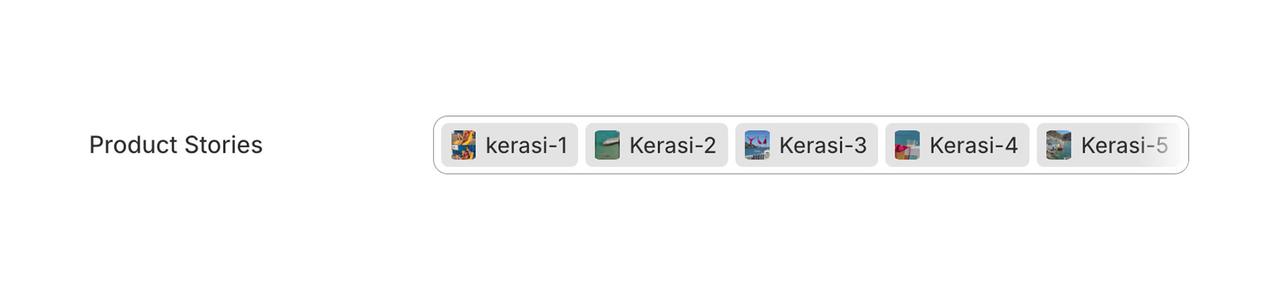
- Shoppable video as the discovery surface, at two levels. Rather than a grid of products, the app leads with shoppable video, the format that suits a fashion brand and, more to the point, lets a swimwear look carry the accessory that goes with it. Missus runs it at two levels: five main videos per campaign on the home feed, and product-specific videos on each product, usually two or three and sometimes up to five, shown as product stories, across a bikini collection that typically runs to around 30 styles. So the customer meets the campaign in video, then meets each individual piece in video again on its own product page. This is the mechanism aimed at the single-item-basket problem: put the rest of the catalog inside the moment the customer is already engaged.
- Push as the standing off-season channel. With the app installed, Missus can reach customers directly for drops, restocks, and off-season ranges, without paying for re-exposure through Meta or fighting an inbox. This is what a seasonal brand actually needs: a line that stays open when the customer isn't shopping.
- A branded owned channel via Klaviyo + app. Email and push run together through Klaviyo, so the app is part of the retention system rather than a standalone download.
Marta's version of why the push channel matters is more concrete than any framing we could write:
“Swimwear is a summer business, but our customers aren't only interested in summer. Being able to tell them about a new sleepwear drop in November, without paying to reach them again, changed what our winter looks like.”
Marta MatiasMissus OwnerWhat the content side actually cost them: about an hour. This is the part brands assume will be the blocker, and for Missus it wasn't, for a specific reason. They were already producing this content for Instagram, and NAPPS's shoppable videos and product stories use the same aspect ratios, so nothing had to be reshot, recut, or reformatted. The only real work was attaching the videos to product metafields, which they did in the same pass as adding the products to Shopify: roughly an hour of work folded into a job they were doing anyway.
That is the honest version of the "do we have the content for this?" question. If a brand is already making vertical video for social, the answer is that the content exists and the cost is data entry. If it isn't, this play is a bigger lift than Missus makes it look.
The Strategy / The Plays
Use shoppable video to move single-item buyers into multi-category baskets, then use push to keep selling in the off-season.
- Sell the look, not the product. Rather than hoping a customer navigates to a separate collection, the accessory appears inside the content they are already watching, at both levels of the video setup described above. Where that shows up in the data is items per order: 3.1 in the app against 2.5 on the web, and the lift is specifically in accessories rather than across every category. The play for any seasonal or fashion brand: put the products that attach to your hero product inside the video of your hero product, and watch units per order rather than AOV, because attaching a cheaper item raises basket size without raising average order value much.
- Own the off-season with push, not ad spend. Once the app is installed, Missus reaches customers for restocks and off-season drops through push and email instead of buying re-exposure. The play: treat the app as the channel that stays open when paid demand is seasonally low, and run targeted sends rather than broadcasts.
- Build the channel you own before you need it. Missus's own framing is that the app is a space on the customer's phone, independent of ads and algorithms. The play for a brand whose demand spikes and collapses with the season: stand up the owned channel while acquisition is cheap, so you're not renting attention back at the worst time of year. Missus did this five years ago, and the compounding is the whole point of the Results section below.
The Results
Five years after launch, the app still carries about 30% of online revenue, and app customers are worth 47% more than storefront customers.
Trailing 365 days, NAPPS channel vs Online Store (Shopify sales-by-channel report, July 2026):
| Metric | App vs. online store |
|---|---|
| Items per order | 3.1 vs. 2.5 |
| Average order value | +12% |
| Amount spent per customer | +47% |
| Orders per customer | +33% (approximate, source figures are rounded) |
| Returning customer rate | 44.20% vs. 33.63% (+10.6 pp) |
| App share of online revenue | ~30%, sustained into year 5 |
Two things make this result worth reading, and neither is the size of the percentages.
The first is the shape. Items per order is the cleanest evidence that the discovery mechanic works: app customers put 3.1 items in an order against 2.5 on the web, and the difference comes specifically from accessories attaching to the main piece. That also explains why AOV only moves 12% while units move more: an accessory is cheaper than a bikini, so it raises the basket without moving the average much. Add the frequency and repeat numbers (a third more orders, coming back at roughly 1.3x the storefront rate) and you get the +47% spend per customer. For a brand whose problem was one bikini, then gone, every metric that moved is one the app was built to move.
One honest limit on that. The cross-category lift shows up in accessories, not evenly across the catalog, so the units data supports "the app attaches accessories to the main piece" and does not yet prove that activewear and sleepwear get discovered better in the app. Given that those ranges were part of the original off-season thesis, that distinction matters, and it is one of the things the new analytics should settle.
The second is the timeframe. The other studies in this collection report the first 90 days or the first year, and those windows matter: the early result is what convinces a brand to keep investing, and brands that see the app work early are the ones that build the habits that compound. Missus is the far end of that same curve. They invested early, kept going, and five years later the app is still taking 30% of online revenue with a returning rate about 11 points above the storefront. Read the 90-day studies for what to expect at the start, and read this one for where it goes if you keep running the loop.
“Seeing customers explore new categories and come back more often, that's when we knew the app was doing more than just driving sales. It was helping us build a real community.”
Marta MatiasMissus OwnerRead it honestly, though. This is a channel comparison, not a controlled test: customers who install an app are self-selected and were probably more loyal to begin with, so some of this gap is composition rather than causation. The direction is consistent across every metric and matches what the app was designed to do, and the five-year persistence is hard to explain by novelty, which together is the strongest claim the data supports. Orders per customer is also rounded in Shopify's UI (2 vs 1.5), so treat +33% as approximate and lead with spend per customer and returning rate.
Conclusion
Missus is the case for seasonal and fashion brands with a discovery problem: strong hero product, secondary ranges that don't get seen, and a demand curve that falls off a cliff for part of the year. The play is to make cross-category discovery the default through shoppable video, and to keep a channel open through push when the season turns cold, so the off-season stops being dead air. The channel data says it worked in the way that counts for a seasonal brand: not a bigger single purchase, but customers who come back at 1.3x the storefront rate and are worth 47% more over a year.
What this study adds to the others is the clock. The 90-day studies show the channel arriving, which is the part that justifies the decision; Missus shows where that arrives if you keep running it. They bet early, kept investing, and five years later the app is simply where a third of the business happens. If the doubt is "will this still be earning its keep in three years?", this is the answer that has actually been tested.
“We were NAPPS's first customer, so we had no idea what we were signing up for. Five years later the app is still about a third of our online business. It stopped being a project a long time ago, it's just where our customers shop now.”
Marta MatiasMissus OwnerFrequently asked questions
Missus is the longest-running app in the NAPPS customer base, live since June 2021, and the app still accounts for around 30% of their online revenue. Over the trailing 365 days, app customers return at 44.20% against 33.63% on the online store and spend 47% more each. The install campaigns and the launch novelty are years behind them, so what's left is what the channel is worth once it is simply part of how the brand operates. One caveat worth stating: this is a channel comparison, not a controlled test, and app users are self-selected.
It gives you a way to reach customers when you aren't paying to reach them. Swimwear demand collapses after summer, so Missus uses push for off-season drops, restocks, and their sleepwear and activewear ranges instead of buying re-exposure through ads. As their co-founder Marta Matias puts it: being able to tell customers about a new sleepwear drop in November, without paying to reach them again, changed what their winter looks like.
Usually not. Missus was already making vertical video for Instagram, and NAPPS shoppable videos and product stories use the same aspect ratios, so nothing had to be reshot or recut. The only real work was attaching the videos to product metafields, done in the same pass as adding products to Shopify: about an hour, folded into a job they were already doing. The honest caveat is that this only holds if you are already making vertical social video. If you aren't, treat it as a bigger lift.
Baskets are genuinely bigger: app customers buy 3.1 items per order against 2.5 on the web. The lift comes specifically from accessories attaching to the main piece, which is also why average order value only moves 12% while units move 24%: an accessory costs less than a bikini. Worth being precise, this proves accessory attach, and not that the activewear and sleepwear ranges get discovered better in the app.
Five main videos per campaign on the home feed, plus product-specific videos on each product shown as product stories, usually two or three and sometimes up to five, across a bikini collection that typically runs to around 30 styles. So a customer meets the campaign in video, then meets each individual piece in video again on its own product page.