

Sunday, July 19th 2026
What to expect in your first 90 days with a Shopify mobile app
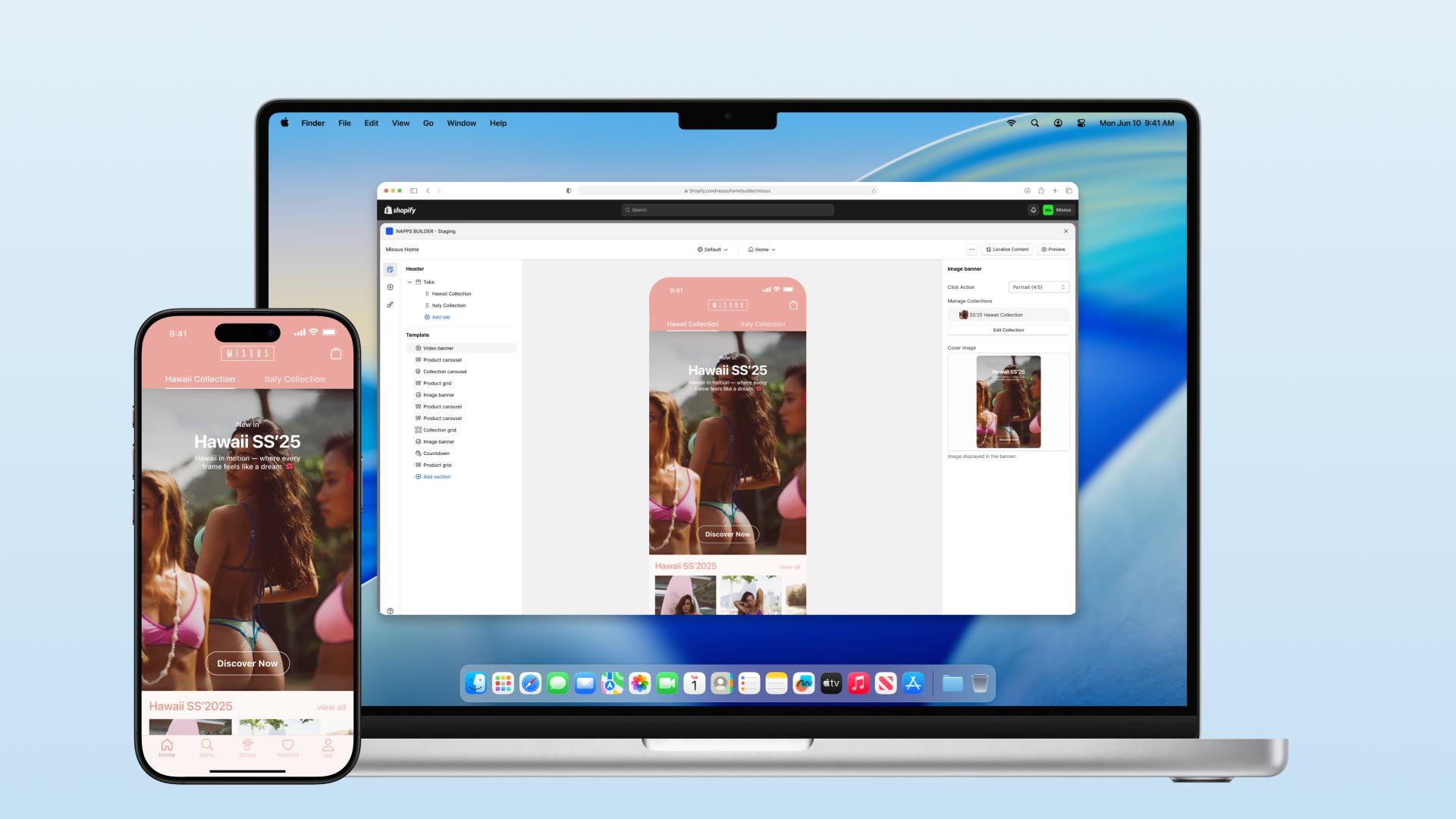

In the first 90 days with a Shopify mobile app, expect month one to turn downloads into first purchases, month two to build the retention engine, and month three to measure the app like a sales channel. How solid that quarter is depends mostly on the setup done before launch, and some early bumps are normal.
This guide covers what to set up before launch, what to do each month, which metrics to watch, and the results real brands have seen. If you are still deciding whether an app is right for your store, start there.
The honest version, upfront
A successful app launch does not end on launch day. It starts a repeatable routine: bring in installs, get first purchases, then bring customers back with push and app-only offers. Brands that keep at it for the first 90 days give the app a real chance to become a revenue channel.
Two expectations to set straight away.
What you can expect. NAPPS customer data shows that brands actively using push, loyalty, and app-only content have seen 15% to 45% of online revenue come through the app in the first months after launch. The share can hold. Missus, a Portuguese swimwear brand, launched five years ago and still gets about 30% of its online revenue through the app.
What you should not expect. Do not plan on a flood of App Store discovery. App growth usually starts by converting customers who already trust you into app users. Your email list, loyalty members, and repeat buyers are the launch audience. New customers from the App Store are a bonus.
With that frame in place, here's the timeline.
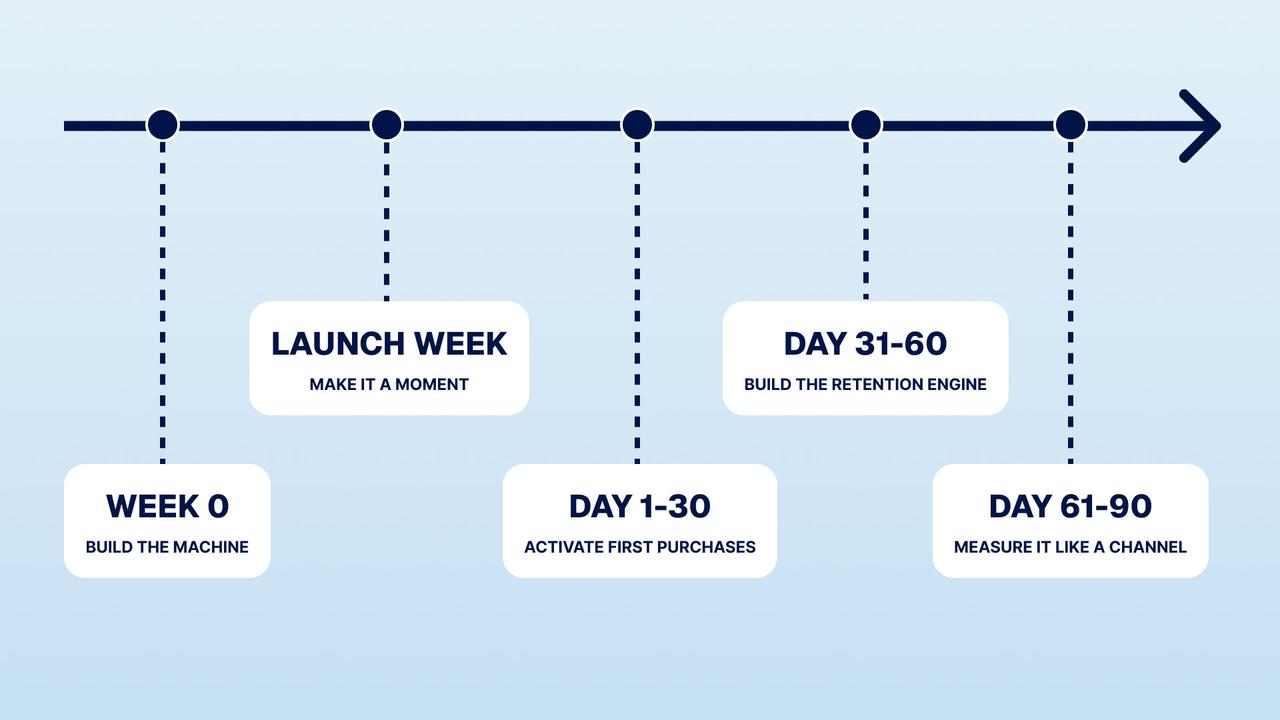
Before launch: build the machine (week 0)
The work before launch decides how quickly the app gets moving. Our complete launch checklist covers every asset in detail. Four things need to be ready on day one:
- Your App Store listing, treated like a landing page. A clear name with an intent keyword, a sharp subtitle, screenshots that lead with benefits. Most brands set this once and never touch it again, which leaves installs on the table from the start.
- Your website wired to drive installs. A smart app banner on mobile ("Get 10% off in the app" converts better than "Download our app"), a QR code for desktop visitors, and deep links so existing links open inside the app instead of the slower mobile web path.
- CRM segments built. Three groups, each with its own reason to install: customers who buy on web but haven't installed, recent purchasers (faster checkout, loyalty points), and later, lapsed app users to win back.
- An install incentive. A first-install discount, a loyalty point multiplier, free shipping in the app, or early access to a sale all work. More Shopify brands are trying store credit: credit for logging in on the first app visit, or extra credit for app purchases compared with web purchases. Customers can spend credit only with you, so it gives them a reason to return. The incentive should drive the install and the first in-app purchase.
This is not optional polish. It is the difference between launching an app and merely uploading one.
Launch week: make it a moment
A launch is a moment, and moments create attention. The playbook for the week the app goes live:
- Announce to your list. Email and SMS to your segments, each with the specific reason to install. Your existing customers are your best download prospects, and this is the single highest-impact send of the quarter.
- Get the push opt-in right. The onboarding flow (market selection, push opt-in, account creation) should get customers to the home screen ready to shop. Every opt-in you win here compounds for the life of the channel.
- Go short-form on social. You don't need to be a content-first brand. Mamba Store planned a single launch video for their app release and it gathered more than 20,000 impressions, turning that attention into installs.
- Run your first app-exclusive campaign. Something that's only available in the app, from day one. Exclusivity turns downloading into a value decision instead of an effort decision.
By the end of launch week you should have your first cohort of installs, your first push opt-ins, and your first in-app orders.
Days 1 to 30: turn downloads into buyers
A download is not adoption. The goal of the first month is activation: getting each new app user to their first in-app purchase quickly, because the first session sets the habit.
Three things to have running:
- Protect intent with deep links. When a customer taps a product link in your email or social and has the app installed, they should land on that product inside the app, logged in, cart intact. Every redirect to mobile web is a chance to lose the sale.
- Switch on the core push automations. Abandoned cart and back-in-stock first; they're the highest-intent triggers you have. Add a welcome series that introduces the app's benefits and nudges the first purchase.
- Ask for reviews at the right moment. Apple only lets you prompt a user for a review three times in a 365-day period, and its system decides whether the prompt actually appears, so timing matters. A sensible moment to ask is right after a customer's first purchase, while the experience is fresh; treat the exact timing as something to test. Higher ratings generally help your App Store ranking, which makes the next install cheaper.
Also in month one, set up cohort tracking for the app and online storefront. You will need that baseline in month three.
What is normal at day 30. Installs will be concentrated among your best existing customers. The push opt-in base will be growing, and first-purchase conversion should be visibly higher in the app than on mobile web. Across NAPPS customers, app conversion has run around five to six times the website, and about 4.7 times mobile web, among a self-selected app audience. If installs feel slow, revisit the incentive and the reach of the launch announcement first.
Days 31 to 60: build the retention engine
Month two is where the app starts earning its keep. Acquisition gets you installs; retention turns those installs into lifetime value.
- Complete the push program. Add order-status updates, price-drop alerts for wishlisted products, and login reminders for installed but anonymous users. Logged-in customers convert better and can receive the personalized automations that follow.
- Make exclusives a rhythm, not a stunt. Use recurring app-only pricing, early access for app users, and drops announced by push. When the app reliably offers something better, customers have a reason to check it.
- Surface loyalty inside the app. Show points while customers browse, let them redeem rewards in the cart, and keep the program one tap away rather than behind a login. Customers who can see their balance are more likely to use it.
What is normal at day 60. Repeat purchases should be appearing in the app cohort, push should be driving measurable sessions and revenue, and the app's share of online revenue should be rising month over month.
Days 61 to 90: measure it like a channel
By month three you have enough data to evaluate the app the way you'd evaluate any channel. Four numbers tell the story, all app versus online storefront:
| Metric | What good looks like |
|---|---|
| Average order value | +5% to +38% lift, positive for every NAPPS customer tracked |
| 90-day spend per customer | +17% on average, with top performers at +47% to +77% |
| Repeat purchase rate | Roughly half of app users or more buying again, depending on category |
| App share of online revenue | 15% to 45% within the first months, when push, loyalty, and exclusives are active |
(Based on NAPPS customer data, app channel vs online storefront, trailing 90-day window. App users are self-selected, so these are observed differences, not an isolated causal lift.)
If the app cohort is not outperforming the storefront cohort by day 90, inspect the retention program, the value of the exclusives, and the app experience itself. A webview can also limit the result. These are practical issues to investigate, not a reason to write off the channel.
What this looked like for Missus
Missus is a Portuguese swimwear brand with a seasonal problem: strong summers, quiet winters, and a need for higher order values.
It is also the longest-running app in our customer base, live for five years. That makes Missus useful when assessing the question behind every launch plan: will this still be a channel in a few years? Its current app and online storefront figures cover the trailing 365 days:
- App customers spend 47% more each
- They order 33% more often, and buy more items per order
- 44.20% of them come back, against 33.63% on the website
- The app still accounts for roughly 30% of online revenue

“The best upgrade I could have had for my business. The APP is super intuitive, highly versatile, user-friendly and easy to use”
Marta MatiasMissus OwnerThe app gives a seasonal brand a direct way to reach its customers throughout the year. The first 90 days matter because early results give a brand a reason to keep investing. The five-year numbers show what that continued work can produce.
Where it goes after day 90
The first 90 days establish the routine. The next step is to keep it running.
Zippy, Portugal's largest children's fashion brand, launched its app in July 2025. Within seven months the app reached roughly 34% of total online revenue. One app-only campaign produced the brand's highest online sales day, ahead of Black Friday and Christmas.
And here's the part that speaks to the question every founder asks: the app didn't appear to cannibalize the website. Zippy's combined digital revenue grew 15% year over year, consistent with the app adding growth rather than shifting it. It's one case, not proof, but it's the pattern we see.
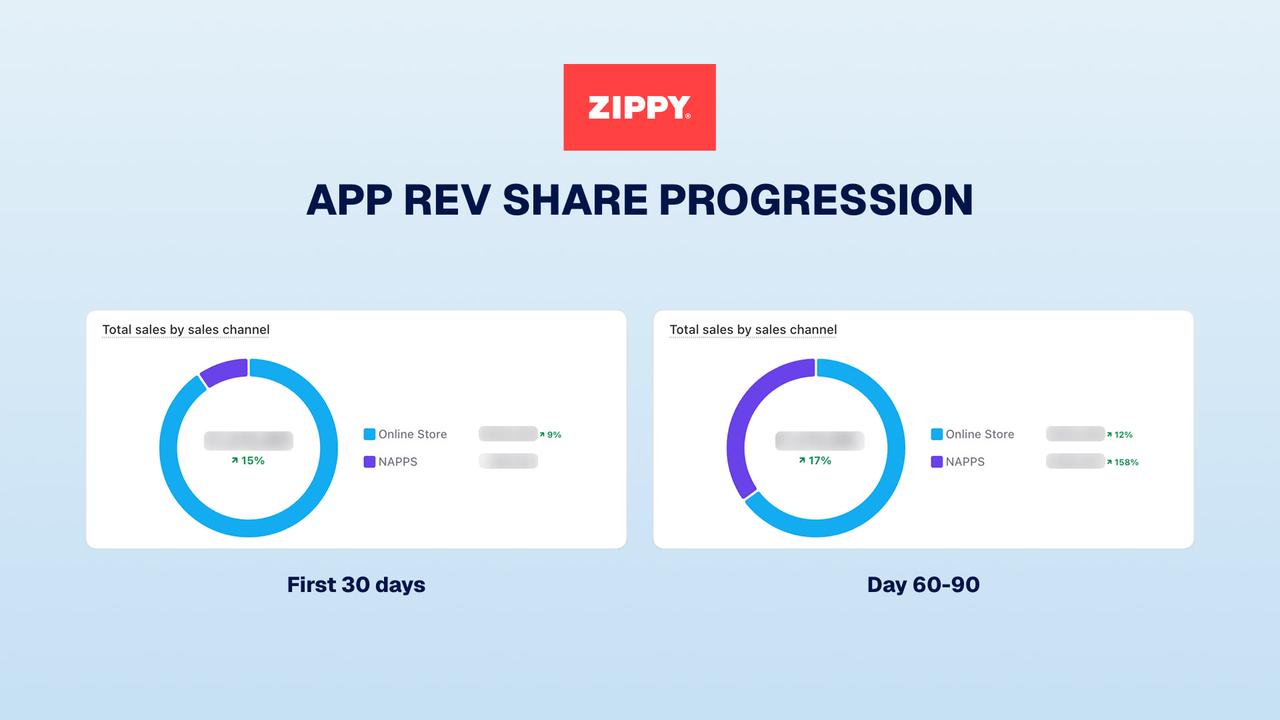
App users often become a brand's highest-spending customers. That takes time, and the first 90 days set the direction.
How NAPPS fits in
NAPPS is a native mobile app builder for Shopify and Shopify Plus brands. It supports this launch plan from the start.
The pre-launch machine comes set up: your App Store listing prepared at launch with your brand assets, the smart app banner, desktop QR codes, and deep linking built in with tracking out of the box. Push is unlimited on every plan, with the automations covered in this guide (welcome series, abandoned cart, back-in-stock, order status, price drops, login reminders) and campaign pushes with scheduling and segmentation. App-exclusive pricing and early access run through Campaign Launcher, and loyalty surfaces in the shopping flow through Growave, LoyaltyLion, or Smile.
The app is free until you are ready to publish, with no setup fee. You can build it, test it, and see it before the first day of the 90-day plan.
FAQ
It can happen in the first few months when the launch plan is running. Based on NAPPS customer data, brands actively using push, loyalty, and app-only content have seen 15% to 45% of online revenue come through the app in that period.
The available evidence is reassuring but not conclusive. Zippy's app grew to roughly 34% of online revenue while combined digital revenue grew 15% year over year, consistent with the app adding growth rather than just shifting it. That single case doesn't isolate causality, so treat it as encouraging directional evidence, not proof.
Across NAPPS customers, app AOV is 5% to 38% above the online storefront, and spend per customer averages 17% higher. Zippy, Planeta Huerto, and Missus are up 47%, while Farma2Go is up 77%. Brands actively using push, loyalty, and app-only content have seen 15% to 45% of online revenue come through the app in the first months. Missus still gets about 30% of online revenue through the app five years after launch.
Four things: an optimized App Store listing, install prompts on your website (smart banner, desktop QR code, deep links), CRM segments with a reason to install for each group, and a first-install incentive. The retention automations (welcome series, abandoned cart, back-in-stock) should be on from week one, not month six.
The bottom line
The first 90 days have a clear sequence. Build the launch plan, make the launch visible, drive first purchases in month one, set up retention in month two, and measure the app as a channel in month three. Brands that do the work give the app a chance to become their highest-spending channel. Brands that upload an app and wait do not.
If you want to see what this timeline would look like for your store, we'll map your traffic, repeat purchase rate, and customer base into a projected launch plan before you commit to anything.
See your first 90 days mapped out
We'll map your traffic, repeat-purchase rate, and customer base into a projected launch plan before you commit to anything.
Book a 20-minute callKeep reading
October 27, 2026 - 10 min read
4 MobiLoud alternatives for Shopify: pricing and fit


October 23, 2026 - 8 min read
Tapcart vs Shopney: pricing, features, and which fits your Shopify store
September 18, 2026 - 13 min read
Tapcart Alternative: NAPPS Pricing, Features & Migration